Q&A
Meet
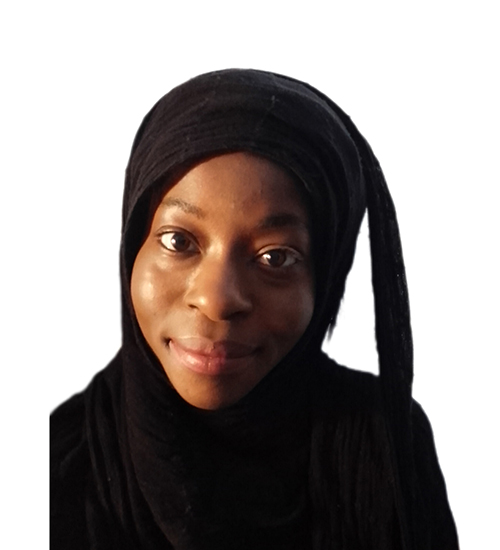
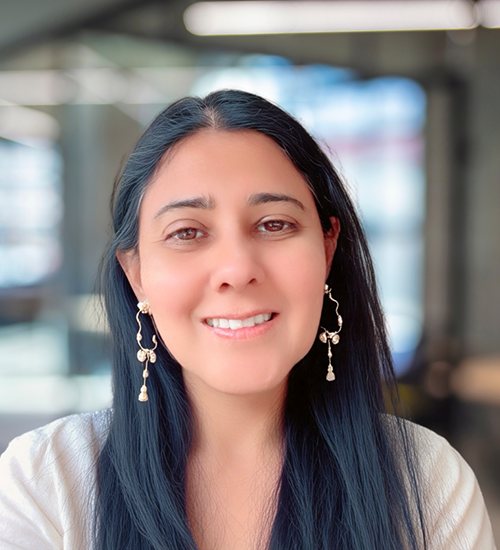
Marisa Paulson
What inspired you to pursue your current career path?
Ironically, when I think about it, my inspiration to build and establish The Write Place was my own personal hurdles in achieving success in the writing industry. To be honest, I've always wanted to experiment with my own little rendition of a "literary magazine," especially since I'm someone who really gets excited about the "scratch" processes. Growing up, I was always curious about how such processes were done, so I thought, "Why not find out by doing one myself?" Although The Write Place isn't a literary webzine, I see it as an online literary platform designed to help writers (mainly) build creative portfolios - essentially, a place for creatives, readers, and writers who enjoy sharing and connecting through words, which form the basis of all communication. Initially, I thought of building the site to market and present my own creative professionalism, since the writing world, like all other creative industries, is undeniably competitive. However, over the years, I realised that at its heart, I just wanted to connect people through writing - and I couldn't think of a better idea to encapsulate that transparency than The Write Place.
What was one defining moment early in your career?
Back when I was a teenager - about 16 or 17 - my eldest sister helped secure a wonderful and unforgettable opportunity to write for The Voice Magazine. At the time, I was deeply immersed in poetry, inspired by my English Literature studies, and I submitted three poems for Black History Month. Around that same time, one of my peers, Misbah Khan, invited me to contribute to a spin-off of her relative's newspaper company - The South Asian Tribune, specifically its supplement called The FYI Tribune. She was aware of my writing explorations and graciously offered me and a few other peers the chance to gain first-hand industry experience. We submitted articles fortnightly, and I decided to revisit prose by writing a series of short stories, around 300 - 350 words each, for which we were paid quite well considering we were still students. Both opportunities gave me a defining taste of writing within the industry - experiences I'm deeply grateful for. There's something uniquely special about the moment when self-recognition of your art meets external validation; it's like that "Ratatouille moment," except instead of a taste, it's a resonance - that giddy feeling when your words are seen, understood, and enjoyed.
How do you define success in your current position?
The subjectivity that words, writing, meaning, and creativity represent has been a lifeboat for me during many moments of doubt and insecurity. I don't see success as a fixed destination or a single "X marks the spot." Instead, I measure it through my consistency - the continuous effort and commitment to progress. Every step I take toward building The Write Place is a success in itself. Of course, achieving a steady and growing audience is a long-term goal, but I've learned that true success lies in patience, perseverance, and purpose throughout the journey - not just in the outcome.
What's one piece of advice you'd give to someone building expertise?
"Spring cleaning is great, but a home that's tended to incrementally will stay fresher for much longer." Begin with small, deliberate steps. Slow progress allows for clarity, deeper understanding, and time for reflection - whereas rushing often leads to overwhelm and uncertainty. Networking is also invaluable; it opened doors for me to exchange creative ideas with others and led to the opportunities that shaped The Write Place. Progress doesn't happen overnight, but every connection and every small effort adds up to something greater.
Who or what played a key role in your success story?
Let's just say my lovely little nieces helped me with the name! I've been fortunate to have a family of curious creatives who have always supported and encouraged my pursuits, alongside friends like Keziah-Ann Abakar - a compassionate creative working in fiction and film - who's always cheered on my ideas. But above all, my deepest gratitude goes to my mother, a Computer Science graduate whose constant talk of tech subconsciously familiarised me with its mechanisms, and my sister, Selina Paulson, whose creativity far surpasses mine. Working with both my sisters on Helu Dates - Selina's artisan Belgian chocolate-covered Medjoul dates venture - was a defining apprenticeship that taught me website design and online marketing. Those early lessons, combined with the love and influence of family and friends, became the "kintsugi" that pieced together my creative journey - a harmony of joy, struggle, and purpose.
What advice would you give to someone just starting out?
I like to think of creativity as a reflection of both our inner and outer worlds - shaped by experience, emotion, and observation. Finding balance between realism and intuition helps turn vision into something tangible. One thing I love about website design is that it lets you express yourself visually without needing technical mastery. With the tools available today - many of them free - anyone can create something meaningful. Building a personal or professional site doesn't just share your work; it helps you understand yourself and shape how the world sees you. It's a small effort with lasting impact.
Lastly, don't fear criticism or judgment. An old friend once told me, "You can't avoid it," and she was right. Every opinion, even the harsh ones, can teach you something about perspective. Remember - like a flower, even when trimmed or uprooted, you can still grow back stronger, so long as your roots - your values and purpose - remain grounded.

Begin
Ready to share your story?
Create a first-person Q&A profile of your own - a considered, lasting record entirely in your own words.