
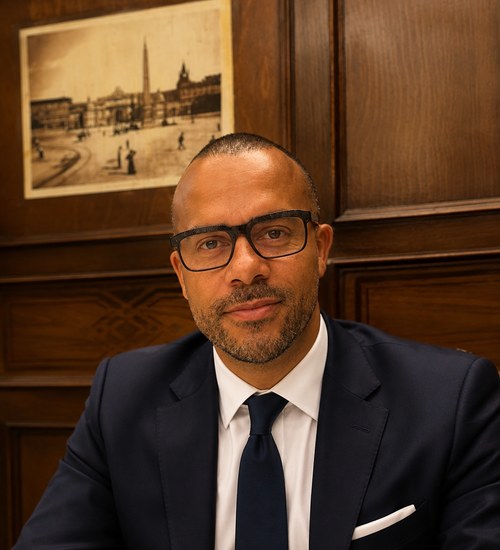
In Conversation
The
Anton Alexander Palmer Interview
Can you walk us through a typical day in your role, and how do you ensure it remains productive?
My day moves between property, care operations, finance, advisers and people. I start by identifying the few decisions that can genuinely move a project forward, then work through the calls, site or operational issues, funding and planning matters that sit behind them. I also protect time for study and reading. Productivity comes from being clear about the next decision, the evidence needed and who owns the action.
What's your approach to transforming ideas into actionable outcomes?
I start with the end state and ask what has to be true for the idea to work. Then I break it into workstreams - usually finance, legal, operations, planning and people - and identify the dependencies. Each important action gets an owner and a date. I would rather test an imperfect first version quickly than spend months perfecting a concept that has never met the real world.
Is there a current trend or development in your industry that particularly excites or inspires you?
The professionalisation of supported living and social infrastructure is particularly interesting. There is an opportunity to bring better-quality, long-term housing capital into care while keeping the focus on the person receiving support. I am interested in structures where property, maintenance, regulation and care delivery are treated as one system rather than separate conversations.
What do you consider your most important leadership trait, and how has it influenced your team or business?
Clarity. People can cope with difficult objectives if they understand what matters, what good looks like and who is responsible. I try to reduce a complicated situation to a small number of decisions and make the ownership of each decision explicit. That does not mean oversimplifying the problem; it means creating enough clarity that talented people can act rather than wait.
Looking back, what advice would you give to your younger self at the start of your professional journey?
Build the right team earlier, ask for specialist advice sooner and keep learning. You will never have every fact, so judgement matters, but strong advisers, clear documentation and the humility to ask for expertise make difficult decisions far easier. I would also tell myself not to treat setbacks as final conclusions; they are usually chapters in a much longer story.
How do you approach risk-taking in business? Can you share an example?
I separate reversible decisions from irreversible ones. Reversible decisions should usually be made quickly, with assumptions written down and monitored. Irreversible decisions deserve more evidence, specialist advice and challenge. In property and acquisitions, that means being willing to move decisively on an opportunity while still treating title, planning, funding, regulation and downside scenarios as separate gates that must each be satisfied.
What legacy or impact do you hope to leave through your work or leadership?
I would like to build useful things that last: homes that work for the people living in them, businesses that create opportunity, and teams that become stronger rather than more dependent on one person. In supported living in particular, I want the property side to support dignity, stability and quality of care rather than being treated as something separate from the service.
What practice or principle do you consistently follow and would recommend to others without hesitation?
Ask, 'What has to be true?' Write down the assumptions behind an important decision before you make it. That single discipline exposes weak logic, shows what evidence is missing and stops optimism from quietly turning into a fact. It also makes later reviews far more useful because you can see whether the decision was wrong or whether the underlying assumptions changed.
What does success mean to you personally and professionally?
Professionally, success is creating durable value without losing sight of the people affected by the decisions. Personally, it is having the freedom to keep learning, spend meaningful time with family and build things I am proud to have been associated with. I am less interested in activity for its own sake than in whether the work still has value several years after the immediate transaction or project is finished.
How do you envision the future of your field, and what role do you hope to play in shaping it?
I see property, care and technology becoming much more integrated. Better data should improve how homes are selected, adapted, maintained and matched to people's needs, while long-term capital can bring greater stability to supported housing. I hope to contribute by combining property development, operating experience and major-programme thinking so that complex projects are structured around outcomes rather than separate teams and functions.

Begin
Ready to share your story?
Create a first-person Q&A profile of your own - a considered, lasting record entirely in your own words.